Instant ramen is a college staple. It’s cheap, quick, and the ultimate convenience food for students juggling class, work, clubs, and a social life.
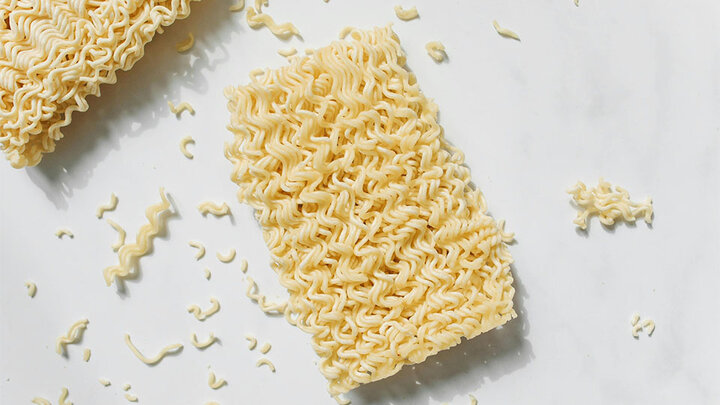
Instant ramen consists of refined wheat noodles and a seasoning packet. The refined wheat noodles are pre-cooked and dried. They are often fried, which helps them cook faster and adds flavor.
The main nutrients include carbohydrates, sodium, and fat. These nutrients provide energy and flavor. However, instant ramen lacks several important nutrients that our body needs daily to stay healthy.
- limited amounts of Fiber, to help with digestion and keeps you feeling fuller longer.
- limited amounts of Protein, to support muscle repair and provides steady energy.
- deficient in the mineral Iron, which helps carry oxygen to your blood.
- deficient in Vitamins, to support brain function, immunity, and overall health.
Additionally, your entire daily allowance of sodium is contained in instant ramen’s single seasoning packet.
With the power of nutrition, you can increase the nutrient density of instant ramen to address these nutritional gaps.
- ADD: Spinach, broccoli, carrots, mushrooms, and any frozen vegetables you may have on hand are a great fiber and vitamin addition.
- ADD: Boost protein with soft-boiled eggs, tofu, edamame, cooked chicken, or canned tuna.
- REDUCE SODIUM: Only use half of the seasoning packet and add additional flavors like garlic, ginger, or sriracha to account for that flavor change.
Instant ramen can still be a convenient and budget-friendly meal by adding vegetables, protein, and a few extra flavors. It’s a great tool to use up leftover ingredients in your fridge or freezer.
You can also experiment with these nutrient boosts at the Nongshim Ramyun Bar inside the Herbie’s Market at Willa Cather Dining Complex. Explore a variety of fresh nutrient-dense add-ins, like onion, shredded carrots, mushrooms, broccoli, shrimp, and diced chicken.
_______________________
Want more nutrition facts and tips for eating in campus dining centers? Connect with Ellyn McCarter, registered dietitian/nutrition manager with University Dining Services at emccarter2@unl.edu.