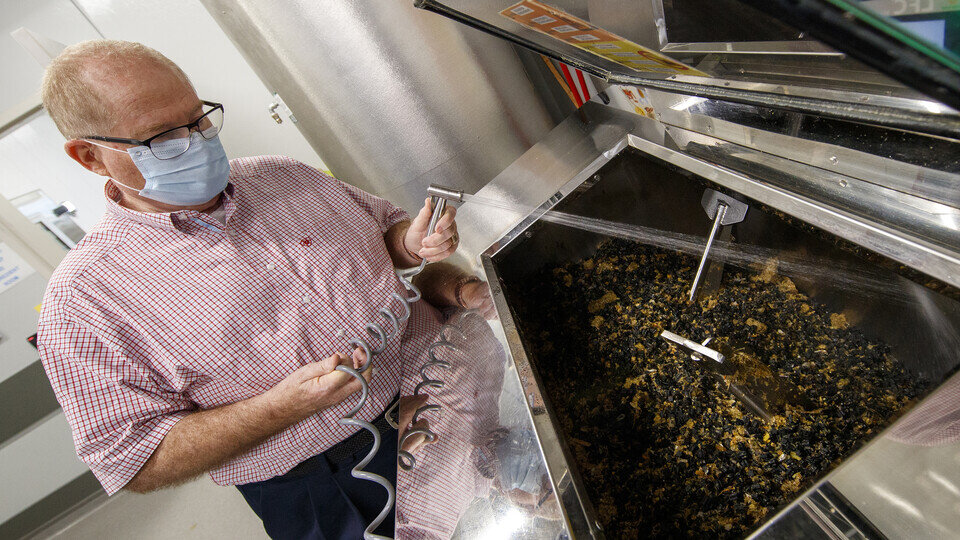
The use of biodigesters at some dining services locations allows us to divert food waste from the landfill and reduce our carbon footprint. The biodigesters that Dining Services use can break down fruit, vegetables, nuts, meat, bread, fish, and cheese, allowing the university to significantly reduce the total food waste it produces.
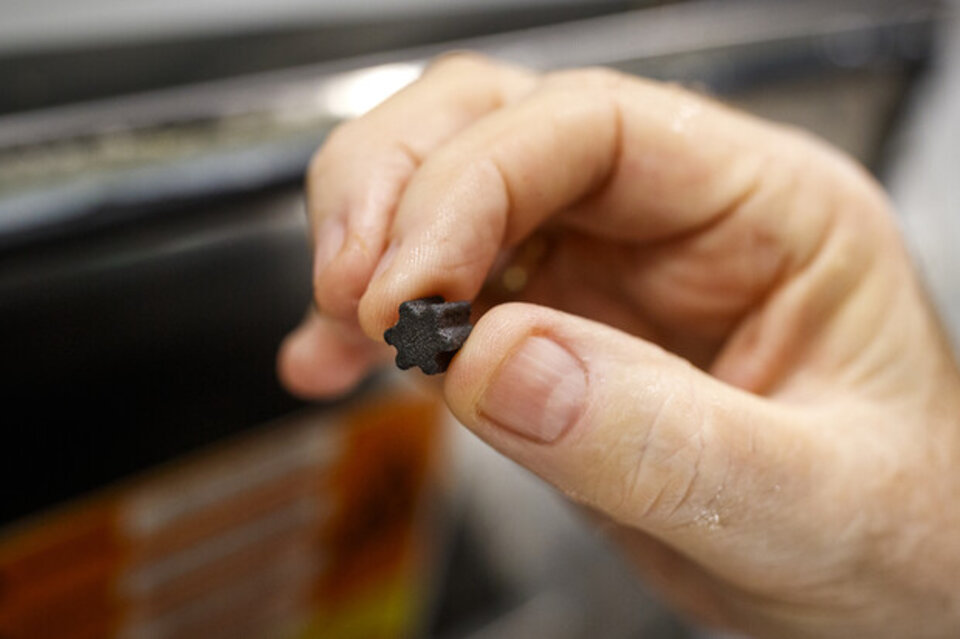
Dave Annis, dining services director, holds one of the enzyme pellets that help mix up the food in the biodigester.
Benefits of Having Biodigesters on Campus can be Summed Up with the Five C's
Convenience
Provides an easy-to-use method of disposing food waste in an environmentally efficient manner.
Cost savings
Eliminates the need to transfer food waste.
Compliance
Results in procedures to safely dispose food waste without sending it to the landfill.
Cleanliness
Eliminates smells, mess, and pests from the trash bins and waste areas.
Control
Provides statistics on usage, diagnostics, and service schedules.
Biodigester Benefits
50,000 POUNDS
of food waste diverted from landfills
95 TONS
carbon footprint reduced by 95 TONS
TIME and MONEY
save TIME and MONEY spent hauling away food
Data taken from Cather Dining Center and Selleck Food Court in 2019–2020.
More information on the biodigesters used by dining services can be found at powerknot.com/lfc.